
Your heat pump is covered in ice, the outdoor unit looks frozen solid, and you’re not sure if this is normal or if something’s broken.
Here’s what you need to know right now.
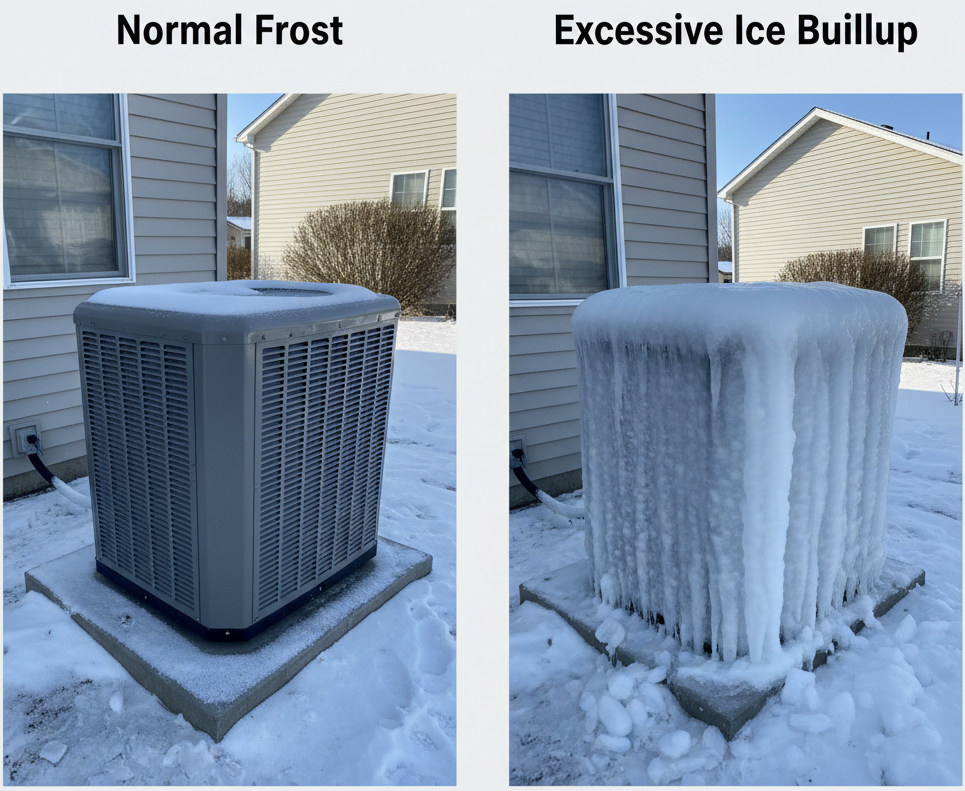
If your heat pump has a light coating of frost on the coils, this is normal. Heat pumps are designed to handle frost. They have automatic defrost cycles that melt ice buildup.
If your unit is encased in thick, solid ice for more than 4 hours, and the defrost cycle isn’t clearing it, you have a problem.
This guide explains the difference, what causes excessive ice buildup, and exactly what steps to take.
Heat Pump Defrost Cycle vs. Freezing: Know the Difference
The number one question we get during winter is,”My heat pump is steaming and making loud noises. Is something wrong?”
Usually, no. That’s your defrost cycle working correctly.
Heat pumps extract heat from outdoor air, even when it’s cold. To do this, the outdoor coils operate at temperatures lower than the surrounding air. When humid air passes over these cold coils, moisture condenses and freezes.
This is basic physics. Your heat pump monitors coil temperature continuously. When sensors detect ice buildup, the system activates defrost mode.
How the Defrost Cycle Works
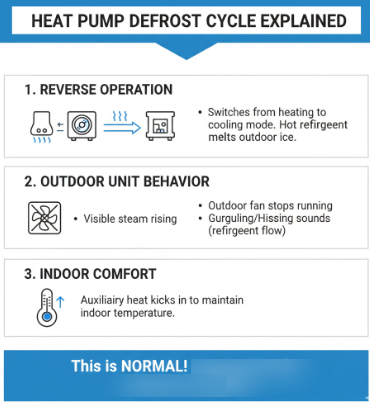
During defrost, your heat pump temporarily reverses operation. It switches from heating mode to cooling mode, sending hot refrigerant through the outdoor coils. This melts the ice.
While this happens:
- The outdoor fan stops running (to avoid cooling the coils you’re trying to warm)
- You’ll see steam rising from the unit (this is ice turning to water vapor)
- The system may make gurgling or hissing sounds (refrigerant flow reversing)
- Your auxiliary heat kicks in to maintain indoor temperature
InterNACHI (International Association of Certified Home Inspectors) states that defrost cycles typically last 5 to 15 minutes and occur every 30 to 90 minutes during cold-weather operation.
So, don’t worry, your system is not malfunctioning. It’s just protecting itself.
| What Normal Defrost Looks LikeLight to moderate frost on outdoor coilsDefrost cycle completes in 10 to 15 minutesIce melts completelySystem returns to heating modePattern repeats as needed | What Abnormal Freezing Looks LikeThick, solid ice encasing the entire outdoor unitIce buildup that doesn’t clear after defrost cycleIce accumulation lasting more than 4 hoursIce blocking airflow through the fins completelyDefrost cycle not activating at all |
If you see the second list, keep reading.
Why Is My Heat Pump Blowing Cold Air in Winter?
This catches people off guard. Your heat pump is running, but cold air is coming through the vents. You check the thermostat. It’s set to heat. So why is it blowing cold?
During the defrost cycle, your indoor air handler temporarily blows cool air. This happens because the system reverses to cooling mode to melt outdoor ice. The process typically lasts 10 to 15 minutes.
Your auxiliary heat (usually electric resistance coils or a backup heating source) should activate during defrost to offset the cool air. In well-designed systems, you might not notice the temperature change at all.
If you feel cool air:
- Check how long it lasts (under 15 minutes is normal)
- Verify your auxiliary heat is functioning
- Confirm the system returns to warm air after defrost completes
Do not turn off your heat pump when you feel cool air during defrost. Let the cycle complete. The system needs to melt that ice to operate efficiently.
According to HVAC.com, if cool air continues for more than 20 minutes, or if it happens when there’s no ice on the outdoor unit, you likely have a different problem (reversing valve failure, refrigerant issue, or control board malfunction).
This is where you need to call a technician.
Heat Pump Iced Up in Winter: What to Do (Step-by-Step)
If your heat pump is frozen and the defrost isn’t clearing the ice, follow these steps in order.
Step 1: Check for Snow and Debris Blockage
Clear at least 2 feet of space around the entire outdoor unit. Snow, ice, leaves, and debris block airflow. Without proper airflow, your heat pump can’t extract heat efficiently, which causes increased ice buildup.
Look for:
- Snow drifts covering the unit
- Ice buildup from roof runoff
- Leaves or branches blocking air intake
- Objects stored too close to the unit
Remove obstructions carefully. Don’t damage the fins or coils.
Step 2: Check for Leaking Gutters
Look up. Is there a gutter directly above your outdoor unit?
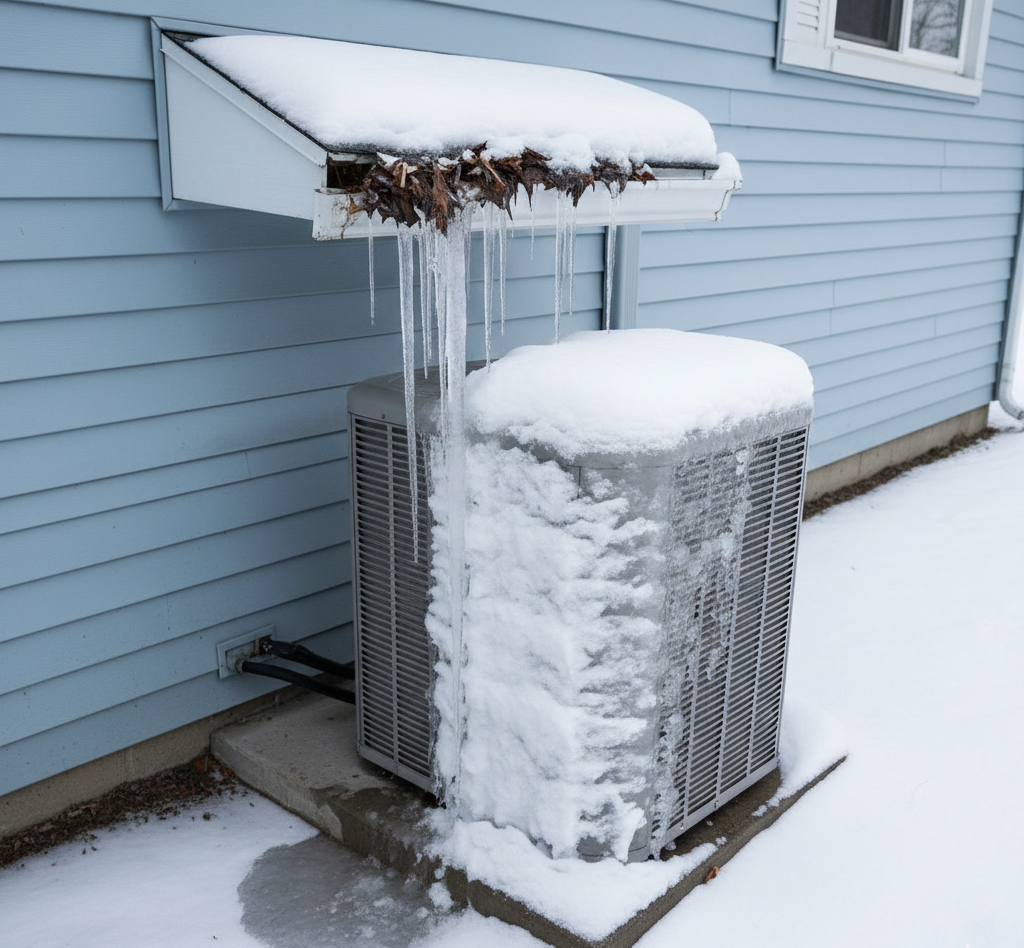
Leaking or overflowing gutters pour water onto the heat pump. That water freezes immediately in cold weather, creating thick ice layers that the defrost cycle can’t handle.
Multiple HVAC technician reports (including Apollo Home and Super Tech HVAC) identify leaking gutters as one of the most common causes of excessive heat pump ice buildup.
If you see a gutter leak, repair it immediately. This prevents the problem from recurring.
Step 3: Turn Off the System and Switch to Emergency Heat
If ice is severe and the defrost cycle isn’t working, turn off your heat pump at the thermostat. Switch to emergency heat mode. This stops the outdoor unit from running while keeping your house warm with auxiliary heat.
Give the ice time to melt naturally. In temperatures above freezing, this might take a few hours. Below freezing, it takes longer.
Step 4: Manually Defrost If Necessary
If you need to speed up the process, you can manually defrost the unit.
Turn off power to the heat pump at the circuit breaker. This is critical for safety.
Use a garden hose with lukewarm water (not hot, not boiling) to gently spray the unit. The goal is to melt ice gradually without thermal shock.
WARNING: Never use sharp objects to chip away ice. Ice picks, screwdrivers, hammers, and other tools will puncture refrigerant coils. A punctured coil means refrigerant leak, expensive repairs, and possible system replacement.
Step 5: Try Fan-Only Mode
Some systems allow you to run the fan without the compressor. Set your thermostat to “fan only” mode. This circulates air through the unit without adding more cold, which can help melt surface ice.
This method works best when outdoor temperatures are above freezing.
Step 6: Call a Professional If Ice Returns
If you manually defrost your unit and ice returns within hours, your system has an underlying problem. Common causes include:
- Faulty defrost control board
- Bad defrost sensor
- Low refrigerant charge
- Stuck reversing valve
- Malfunctioning fan motor
These require professional diagnosis and repair.
Common Causes of Excessive Ice Buildup
Understanding why your heat pump ices up excessively helps you prevent it.
Low Refrigerant Levels
Refrigerant is what carries heat. If your system is low on refrigerant (due to a leak), the coils get colder than designed. Colder coils freeze faster.
You can’t fix this yourself. A technician needs to locate the leak, repair it, and recharge the system with the correct refrigerant amount.
Defrost Control Board Failure
The defrost control board monitors coil temperature and activates defrost cycles. If the board fails, defrost cycles either don’t run at all or run at the wrong times.
According to Service Champions and Super Tech HVAC, faulty defrost sensors and control boards are common causes of heat pump freeze-up, particularly when systems overheat from overwork during extreme cold.
Older systems use mechanical timers. Newer systems use solid-state controls with temperature sensors. Both can fail.
Dirty or Blocked Coils
Dust, dirt, pollen, and debris accumulate on outdoor coils over time. This blocks airflow and heat transfer, causing the coils to get colder than normal, which increases ice formation.
Regular cleaning prevents this. Schedule annual maintenance before winter.
Incorrect Airflow
If your indoor air filter is clogged, or if return vents are blocked, indoor airflow decreases. This affects the entire system’s operation and can contribute to outdoor coil freezing.
Check your air filter monthly during heating season. Replace it when dirty.
Stuck Reversing Valve
The reversing valve switches your heat pump between heating and cooling modes. If it sticks in the wrong position, the defrost cycle can’t activate properly.
This requires professional repair.
Extreme Weather Conditions
During prolonged periods of extreme cold (below 0°F) combined with high humidity, even properly functioning heat pumps can struggle with ice buildup. The defrost cycle may not generate enough heat to fully clear ice before the next buildup cycle begins.
This is rare in most climates but can happen during severe cold snaps.
How to Protect Heat Pumps from Snow Load? (Especially in Snowy Regions)
If you live in an area with heavy snowfall, proactive protection prevents ice problems.
Install a Snow Shield or Roof
A simple shelter over your outdoor unit prevents snow from piling on top of the unit while still allowing airflow from the sides. These cost $100 to $300 and install in an afternoon.
Make sure the shelter doesn’t block airflow. Leave all sides open.
Raise the Unit on a Platform
Installing your heat pump on a raised platform (18 to 24 inches high) keeps it above typical snow accumulation. This prevents the unit from being buried during heavy snowfall.
This is especially important in regions that regularly receive 12+ inches of snow per storm.
Clear Snow Promptly After Storms
After heavy snowfall, clear snow away from your unit as soon as safely possible. Don’t wait for it to melt naturally.
Use a broom or soft brush. Don’t use a shovel directly against the unit (you can damage fins).
Check Drainage
Make sure the area around your heat pump drains properly. Standing water turns to ice. If water pools around the unit during thaw cycles, it refreezes overnight and creates ongoing ice problems.
Grade the ground slightly away from the unit, or install a small drainage channel if needed.
Heat Pump Maintenance Checklist to Prevent Ice Issues
Regular maintenance prevents most ice-related problems.
Before Winter (Fall Maintenance)
- Clean outdoor coils (remove dirt, leaves, debris)
- Check refrigerant levels
- Test defrost cycle operation
- Inspect coil fins for damage
- Verify proper drainage around unit
- Clear vegetation within 2 feet of unit
- Check gutter alignment and repair leaks
During Winter (Monthly Checks)
- Replace indoor air filter
- Clear snow and ice accumulation promptly
- Verify defrost cycles are activating
- Check for unusual noises or performance issues
- Monitor ice buildup patterns
After Winter (Spring Maintenance)
- Clean outdoor unit thoroughly
- Inspect for winter damage
- Schedule professional tune-up
- Check refrigerant levels
- Test all system functions
When to Call a Professional Heat Pump Technician?
Some situations require professional help.
Call a technician if:
- Ice returns immediately after manual defrosting
- Defrost cycle never activates
- You see ice on both indoor and outdoor coils
- The unit is completely encased in ice and won’t clear
- You hear grinding, squealing, or unusual mechanical noises
- The system stops heating entirely
- Ice buildup happens repeatedly despite clearing snow and debris
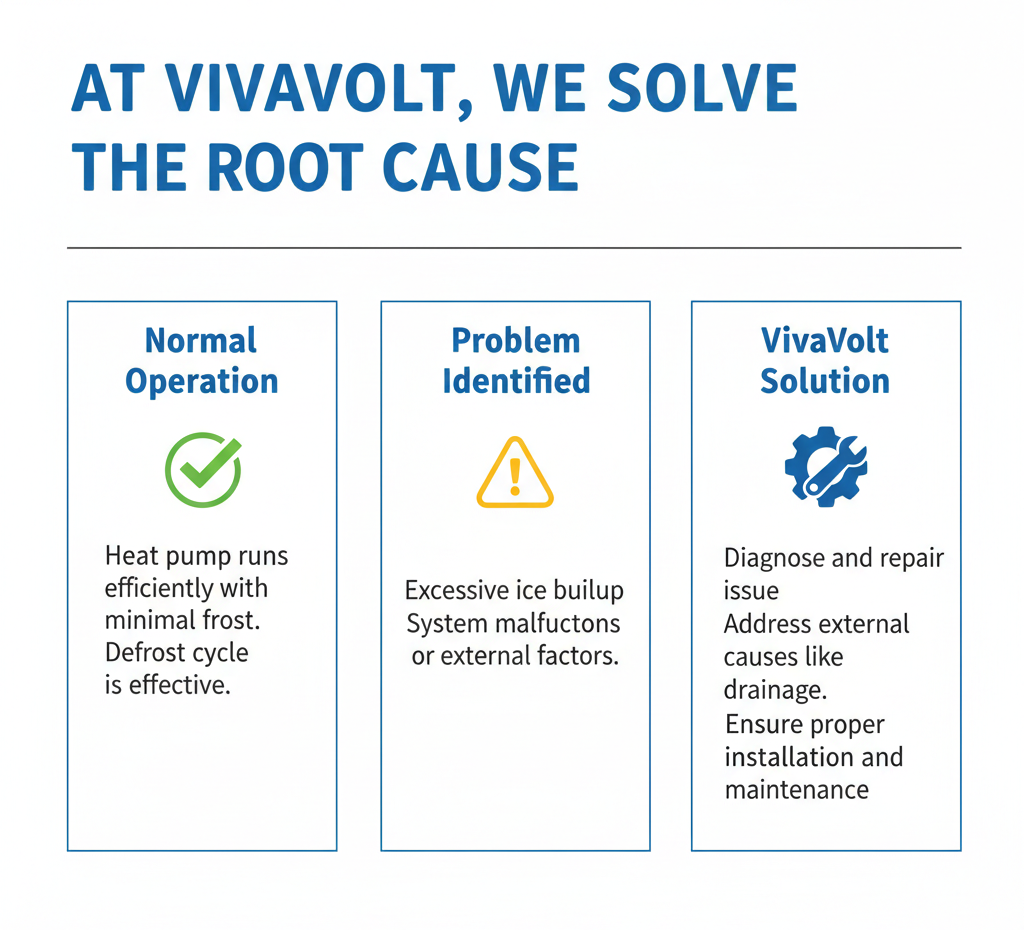
At VivaVolt, we don’t just fix the immediate problem. We identify why it happened in the first place. A properly installed and maintained heat pump shouldn’t ice up excessively under normal operating conditions.
If yours does, something in the system needs attention. That might be refrigerant levels, airflow, defrost controls, or installation issues.
We commission every system we install. We check the refrigerant charge. We verify defrost operation. We make sure drainage is correct. These steps prevent problems before they start.
When you call us because something isn’t working right, we don’t hide behind warranties or blame the weather. We fix it.
Final Thoughts
Some ice on your heat pump in winter is completely normal. Defrost cycles handle it automatically.
Excessive ice that doesn’t clear or ice that returns immediately after defrosting, indicates a problem. Common causes include blocked airflow, leaking gutters, low refrigerant, or defrost control issues.
You can clear snow and debris yourself. You can manually defrost with lukewarm water if needed. But if ice keeps coming back, call a professional.
Never chip ice with sharp tools. You’ll puncture the coils and turn a minor issue into an expensive repair.
Proper installation and regular maintenance prevent most ice problems. If your heat pump repeatedly struggles with ice buildup, the system either wasn’t sized correctly for your climate, wasn’t installed properly, or needs repairs.