
For the majority of U.S. households, heat pumps are cheaper to run than conventional HVAC systems. Homeowners save an average of $300 to $1,500 a year, according to the U.S. Department of Energy (DOE) and the National Renewable Energy Laboratory (NREL), with the greatest savings occurring when replacing oil, propane, or electric resistance heating. Modern cold-climate heat pumps remain efficient in freezing temperatures and are eligible for federal and state incentives, which significantly reduce upfront costs.
Source: https://www.nrel.gov/news/detail/press/2024/benefits-of-heat-pumps-detailed-in-new-nrel-report
If your energy bills feel unpredictable or consistently higher than they should be you’re not alone. Heating and cooling account for nearly 50% of the average U.S. household’s total energy use, making HVAC decisions one of the most financially impactful choices homeowners make.
Many people are now searching online for “heat pump vs traditional HVAC system” to determine which option allows them to take advantage of lower monthly costs while still keeping their home comfortable. It makes sense: furnaces have been the standard for decades to heat your house, while heat pumps are often seen as new tech, experimental, or ineffective during cold weather.
This research study shows how each system works, compares real-world operating costs, and uses real-world data from the DOE and NREL to determine under which conditions a heat pump actually saves money and when it might not. The purpose here is explanatory rather than persuasive, drawing solely on research published by recognized authorities in the field.
Source: https://www.energy.gov/energysaver/heat-pump-systems
How Heat Pumps Work
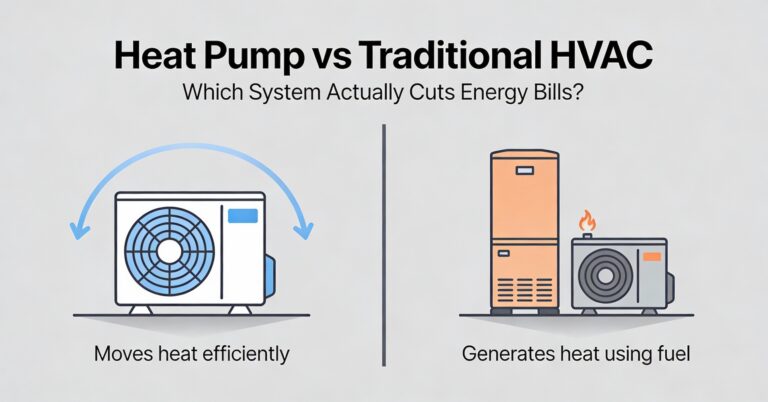
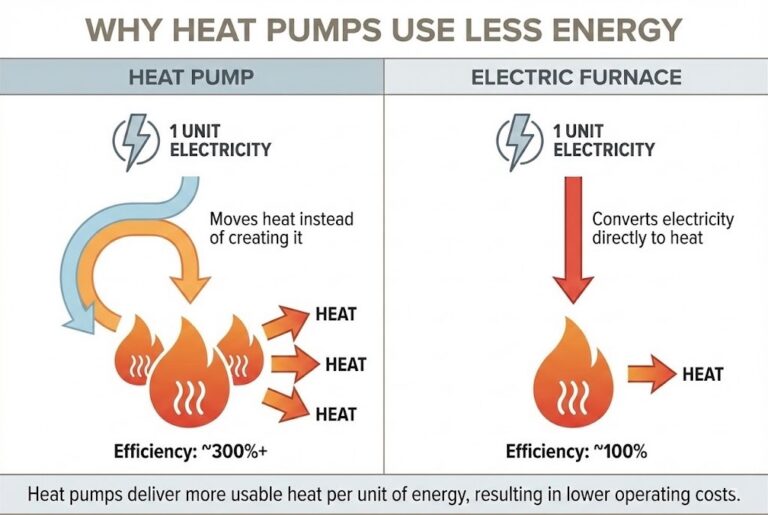
A heat pump does not create heat. Instead, it moves heat using electricity.
Even cold winter air contains useful heat, and modern heat pump technology is designed to capture it and efficiently supply it to your home at temperatures well below freezing.
Because they transfer rather than generate heat, heat pumps require far less energy to keep a house comfortable.
A traditional HVAC systems normally consist of:
A furnace creates heat by burning fuel or electric resistance coils; they both consume energy. Cooling requires a separate compressor, which increases maintenance costs and operating costs.
Heat pumps are measured by the Coefficient of Performance (COP) the amount of heat delivered per unit of electricity used. Modern heat pumps often achieve a COP between 2 and 4, meaning they deliver two to four units of heat for every unit of electricity consumed.
By comparison:
According to the DOE, heat pumps can reduce electricity use for heating by up to 75% compared to older electric heating systems. When replacing oil or propane systems, the cost savings are often even greater.
|
Factor |
Heat Pump |
Traditional HVAC |
|
Heating method |
Transfers heat |
Burns fuel or uses resistance |
|
Cooling |
Included |
Separate AC system |
|
Typical efficiency |
COP 2–4 |
COP ~0.8–1 |
|
Annual energy cost |
$500–$1,200 |
$800–$2,000 |
|
Carbon emissions |
Lower |
Higher |
|
Incentives available |
Yes |
Limited |
Federal studies from the U.S. Department of Energy and NREL say the average savings are very good, but real-world results depend a lot on the system design, cold-climate performance ratings, and proper sizing for the home. An examination of how today’s heat pumps are designed and how efficiency claims are calculated helps homeowners to scrutinize those claims with a critical eye and make purchase decisions that are based on hard data instead of conventional assumptions.
→ REVIEW evidence-based heat pump system basics here> https://vivavolt.us/heat-pumps
NREL estimates that 62–95% of U.S. homes can reduce total energy costs by switching to a heat pump, depending on fuel type, electricity rates, and insulation quality.
Source: https://www.nrel.gov/news/detail/press/2024/benefits-of-heat-pumps-detailed-in-new-nrel-report
Yes, modern cold-climate heat pumps are specifically designed for low temperatures.
In most of the U.S., heat pumps will work efficiently year-round for heating and cooling your home without a supplementary system.
Heat pumps reduce carbon emissions 50%+ compared to fossil-fuel heating systems. And as the electric grid gets more renewable, you can watch your emissions decline automatically without needing to replace any equipment.
For homeowners seeking lower bills and reduced environmental impact, heat pumps offer a future-proof solution.
Advantages
Considerations
Decision Checklist
Yes. Most homeowners save $300-$1,500 annually, depending on fuel type and climate.
Typically 15-20 years with proper maintenance.
Modern cold-climate models perform efficiently well below freezing.
Maintenance costs are typically lower than those of traditional HVAC systems because they have fewer components related to combustion.
The question is no longer whether heat pumps can save money, but are they right for your home, climate, and long-term plans.
For most US homes, new heat pumps offer:
A professional energy assessment is the best way to determine exactly how to make your home more energy efficient and help you save money.