
Most Boston homeowners hear “heat pump” and immediately worry about one thing: what happens in extreme winters when it hits 5°F, and they’ve ripped out their furnace?
The answer, for a lot of households, is: you don’t have to rip it out.
Massachusetts has a setup called a hybrid heating system, also known as dual fuel. You install a heat pump, keep your existing gas or oil furnace as a backup, and a small piece of technology called integrated controls handles the rest automatically.
You still qualify for the Mass Save rebate. You still cut your heating bills. And you keep the backup system that lets you sleep at night.
Here’s what the 2026 requirements actually mean, and how the whole thing works in practice.
What Are Integrated Controls? (The Brain of the System)
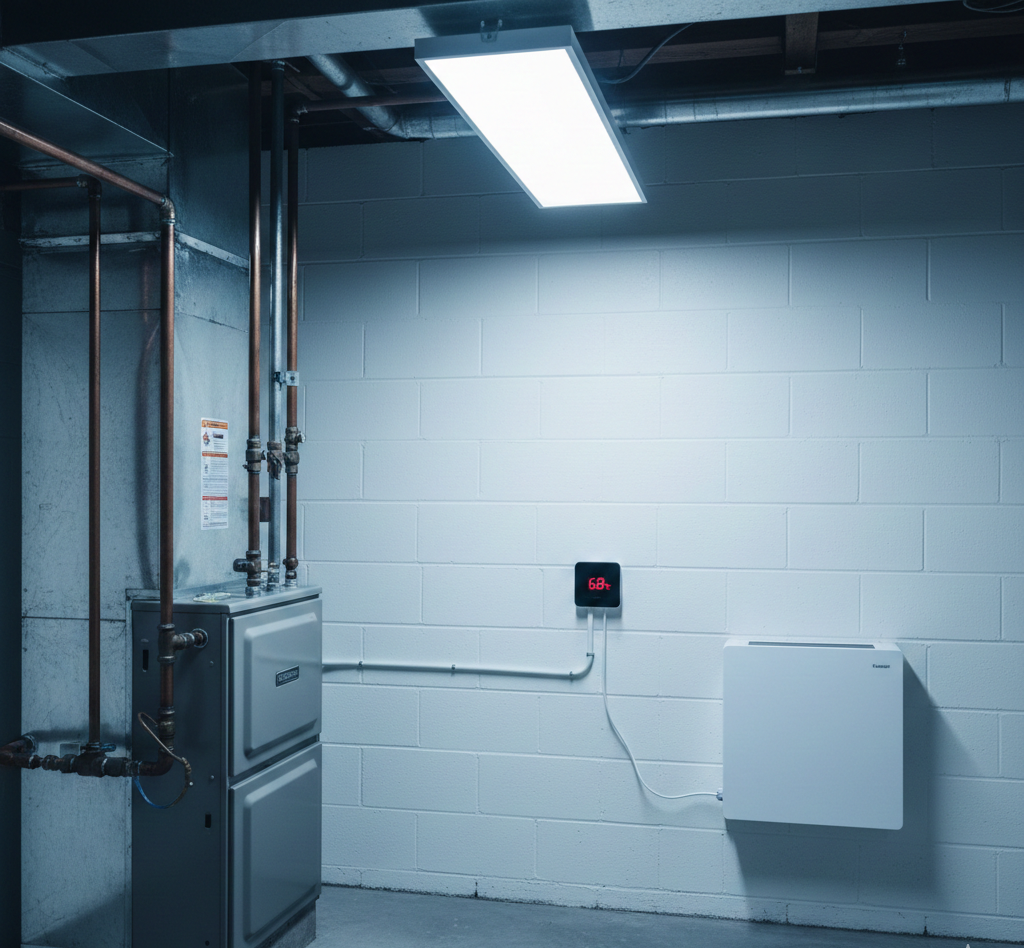
Integrated controls are the answer to a question most homeowners don’t know to ask: how do a heat pump and a furnace know which one should be running?
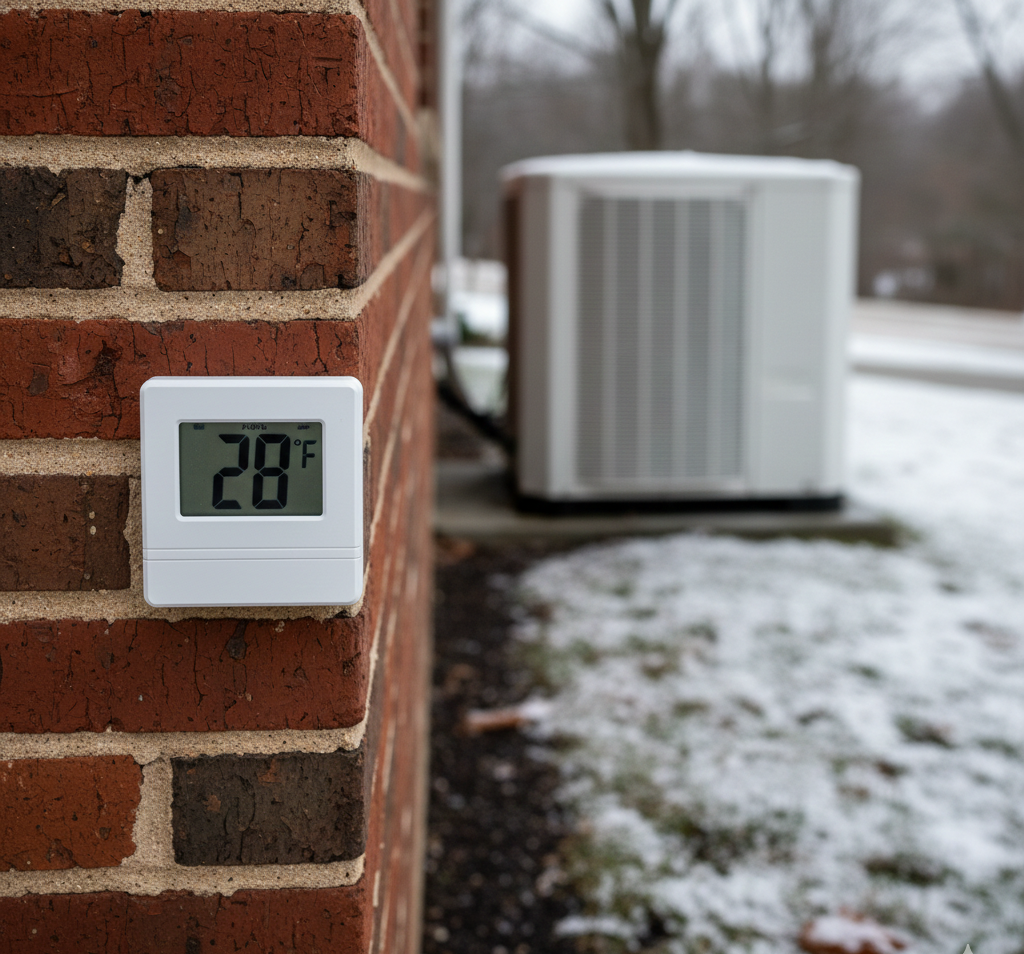
| Without integrated controls, you’d be manually switching between systems or running both at once and wasting money. | With integrated controls, an outdoor temperature sensor feeds real-time data to a controller that makes the decision for you automatically. |
It means above a set temperature, the heat pump runs. It’s pulling heat from outside air and moving it into your home at 300% efficiency or better.
And below that temperature, the system switches to your furnace, which delivers reliable high-output heat during the deep cold stretches.
Mass Save defines this clearly: integrated controls “automatically switch between a heat pump and a fossil fuel heating system at a pre-set outdoor temperature” to “minimize the use of a boiler or furnace while maximizing the use of a heat pump to provide maximum savings and comfort.”
You never touch the thermostat. It handles itself.
The 2026 Integrated Controls Requirement: What You Need to Know
This is where a lot of homeowners get confused, so let’s be direct about the 2026 rule.
If you are installing a heat pump to supplement your existing gas, oil, or propane system (not replacing it entirely), and you want to qualify for the Mass Save partial-home rebate, you must install an approved integrated control on every zone that still uses the fossil fuel system.
The 2026 partial-home rebate sits at $1,125 per ton, capped at $8,500. That’s real money, and you don’t get it without the integrated controls in place.
The switchover temperature also has limits. For oil or natural gas backups, the controller must be set at or below 30°F.
For propane backups, it’s 5°F. Mass Save verifies these settings during post-installation inspections, so it’s not optional fine print.
The Dual Fuel Advantage: Why Hybrid is Smart for New England
Here’s the math that makes this setup work, and it’s straightforward once you see it.
Heat pumps are most efficient in moderate cold.
- At 40°F, a modern cold-climate heat pump delivers a COP (coefficient of performance) of around 3.7, meaning for every $1 of electricity, you get $3.70 worth of heat.
- At 20°F, that drops to roughly 2.5, which is still more efficient than burning fuel.
- Below 0°F, the heat pump is working harder, and your gas or oil backup, running at 80-95% efficiency, becomes the cheaper option.
A hybrid system doesn’t pick one approach and stick with it regardless of conditions. It picks the right tool based on the temperature outside. That’s what makes it smart.
Massachusetts winters typically split something like this: the heat pump handles the majority of the season, the furnace carries the extreme cold days, and your total fossil fuel use drops 80-95% compared to heating with oil or gas alone.
So, the results look like lower bills, a smaller carbon footprint, and the peace of mind that comes from having a high-output backup when the thermometer falls hard.
The Switchover Temperature Explained
Your contractor sets the switchover temperature during installation. For most Massachusetts homes running on oil or gas backup, this lands somewhere between 25°F and 30°F.
- What that means in practice is when outdoor temperatures are above 30°F, the heat pump runs and handles your home’s heating load at peak efficiency.
- When temperatures drop below 30°F, the integrated control signals the furnace to take over.
Mass Save offers a Heating Comparison Calculator on their website that uses your actual fuel prices and zip code to help determine the most cost-effective switchover point for your situation. It’s worth running the numbers before installation.
One more thing worth knowing is that if you’re in a heating zone where you plan to completely displace the fossil fuel system, you don’t need integrated controls for that zone.
The requirement only applies where the existing fuel system stays in use.
What This Means: Do You Qualify for Your Rebate?
Under the 2026 Mass Save program, homeowners who go the whole-home route (full fossil fuel removal) qualify for a rebate of $2,650 per ton, capped at $8,500.
Those keeping their furnace and adding a heat pump as a supplement qualify for $1,125 per ton, capped at $8,500, but must install integrated controls.
There’s also a separate rebate specifically for adding integrated controls to an existing heat pump setup: $500 per indoor unit, up to $1,500. So if you already have a heat pump running without integrated controls, it may be worth adding them now.
All equipment must be ENERGY STAR Cold Climate certified and on the Mass Save Qualified Product List.
Installation must be done by a contractor in the Mass Save Heat Pump Installer Network.
The 0% HEAT Loan is still available for qualified homeowners, up to $25,000, financed over 7 years, through participating lenders.

Bottom Line
You don’t need to rip out a working furnace. You don’t need to go all-electric overnight. The hybrid approach exists specifically for homeowners who want the efficiency gains and the rebate while keeping a safety net for the coldest days of the year.
The key is getting the integrated controls installed correctly, set to the right switchover temperature, and documented properly so your rebate application goes through without issues.
At VivaVolt, we walk through the whole picture with you before installation: what system makes sense for your house, whether hybrid or whole-home is the smarter path, and how to get the rebate without the paperwork headaches.
If you’re in the Greater Boston area and want a straight answer about your options, call us at 781-908-2200 or request a quote at vivavolt.com.
FAQs
Do I need to remove my furnace to get the Mass Save rebate?
No. The Mass Save partial-home rebate is specifically designed for homeowners who keep their existing gas or oil furnace as backup. You install a heat pump, add integrated controls, and both systems work together. The 2026 partial-home rebate is $1,125 per ton, capped at $8,500.
What are integrated controls and do I need them?
Integrated controls are a smart thermostat system that automatically switches between your heat pump and your furnace based on outdoor temperature. If you’re keeping a gas, oil, or propane system in any heating zone and applying for the Mass Save partial-home rebate, they are required under the 2026 Mass Save integrated controls requirements.
What temperature does the system switch from heat pump to gas?
For most Massachusetts homes with oil or natural gas backup, the switchover temperature is set between 25°F and 30°F. Mass Save requires it be set no higher than 30°F for oil and gas systems. Your contractor sets this during installation.
How much does a hybrid heating system cost in Massachusetts?
Hybrid heating system cost in MA varies by home size, equipment brand, and whether you need electrical upgrades. The heat pump portion typically runs $12,000–$22,000 before rebates. After the Mass Save rebate (up to $8,500) and federal tax credit (up to $2,000), most homeowners bring their net cost down significantly. The 0% HEAT Loan can finance the remainder.
Can I get the Mass Save rebate for a gas furnace heat pump combination?
Yes. The Mass Save rebate for dual fuel or hybrid setups falls under the partial-home rebate category. The gas furnace heat pump combination qualifies as long as integrated controls are installed and the heat pump is ENERGY STAR Cold Climate certified and on the Mass Save Qualified Products List.